The coffee market is growing in Türkiye and around the world, but entering it can seem difficult. If you want to sell coffee under your own brand without managing production, private label is an option worth understanding.
What is private label?
Private label means that a manufacturer produces goods sold under another company’s brand. You work with a coffee producer and leave production to them, while the packaging, name and design belong to your brand. The producer handles production; you handle branding and sales. Widely used in food, cosmetics and cleaning products, this model has also attracted interest in coffee.
Private label and white label
White label generally adds your logo to an existing product that is also available to other brands. Private label can customise the contents, blend and packaging. That flexibility can help a brand develop a distinctive identity.
Advantages of private label coffee
You do not need to invest in roasting equipment, training, storage processes or your own logistics network to begin. You can focus on marketing, sales and growing your brand. Packaging colours, labels, names and even QR codes can be customised. Many producers accept smaller orders, helping reduce initial risk. Espresso, filter coffee, single-origin coffee and Turkish coffee offer different product possibilities.
The production process
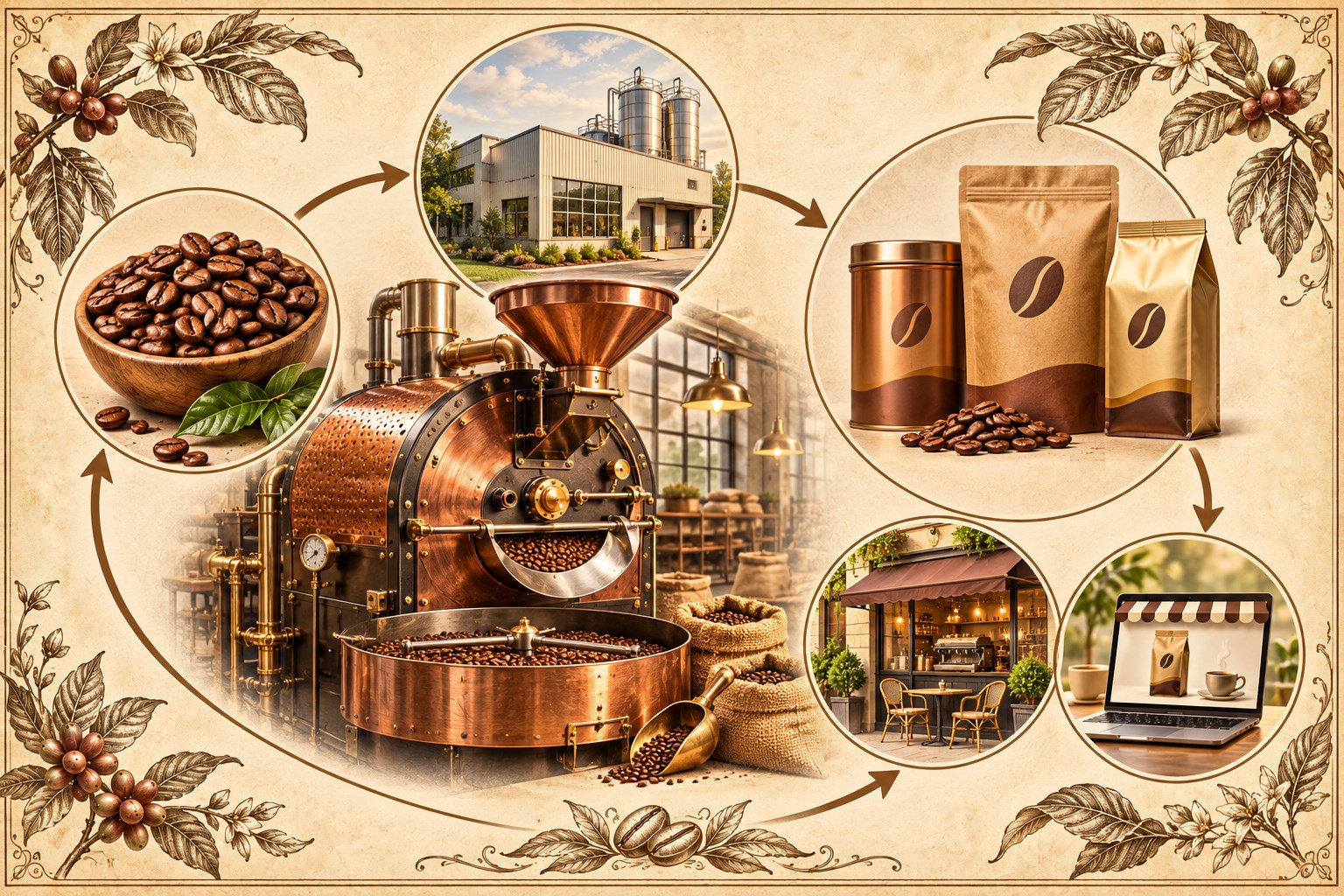
1. Research a reliable producer and, where possible, request samples to assess quality. 2. Agree on the coffee and roast: for example, dark-roasted Arabica espresso in a 1,000 g tin. 3. Choose packaging such as tins, kraft bags or doypacks, using your design or the producer’s support. 4. Prepare the brand name, product name, weight, ingredients and origin information; additional languages can support export. 5. After the coffee and design are approved, production starts and the products are delivered within the agreed timeframe.
Advice for your brand
Know your audience: young consumers, coffee enthusiasts or another group. Write a brand story explaining why you do this. Treat packaging design professionally because it shapes first impressions. Use your website, social media and marketplaces effectively. Keep quality consistent to encourage repeat purchases.
Where can you have private label coffee made?
The original article highlights producers in cities such as İstanbul, İzmir and Bursa. Before discussions, define your quality expectations, minimum order needs and production timetable. Overseas suppliers are another option, but logistics costs and customs procedures must be considered.
Creating your own coffee brand
Working with a suitable producer can make it possible to launch a brand without building a production facility. A coffee brand communicates an experience and a way of life as well as a product.
Why Coffee Brand Mark?
Coffee Brand Mark is a supplier and partner offering private label coffee production for entrepreneurs, coffee shops, restaurants, hotels and businesses looking to create their own brand.
We do more than produce coffee: we turn dreams into brands and brands into reality. With your name and logo, we bring coffee roasted with our passion and care to your customers.
Beyond traditional coffee production, we help new coffee brands take shape through customisable packaging, brand consultancy and quality raw material supply.
Whether you are a new entrepreneur or an established chain, Coffee Brand Mark is by your side as you create your own coffee brand.
Why Coffee Brand Mark? We approach coffee as an experience. We value the story and distinctive qualities of each coffee and handle bean selection, roasting and grinding with care. Our aim is for coffee lovers to feel that attention in every sip.
We believe coffee is a culture, an art and a way of life. Drawing on that culture, we offer a turnkey service to anyone who wants to establish a coffee brand.
Frequently asked questions
Minimum order quantities vary by producer. The original article mentions a general range of 50–100 kg; this is not a confirmed minimum for your Coffee Brand Mark project. Ask us for a specific quote. Registering your name and logo can help protect your brand; seek appropriate trademark guidance. Export requires suitable labelling and documentation. Your branded coffee may be sold through your own website and marketplaces, subject to the applicable platform and legal requirements.