
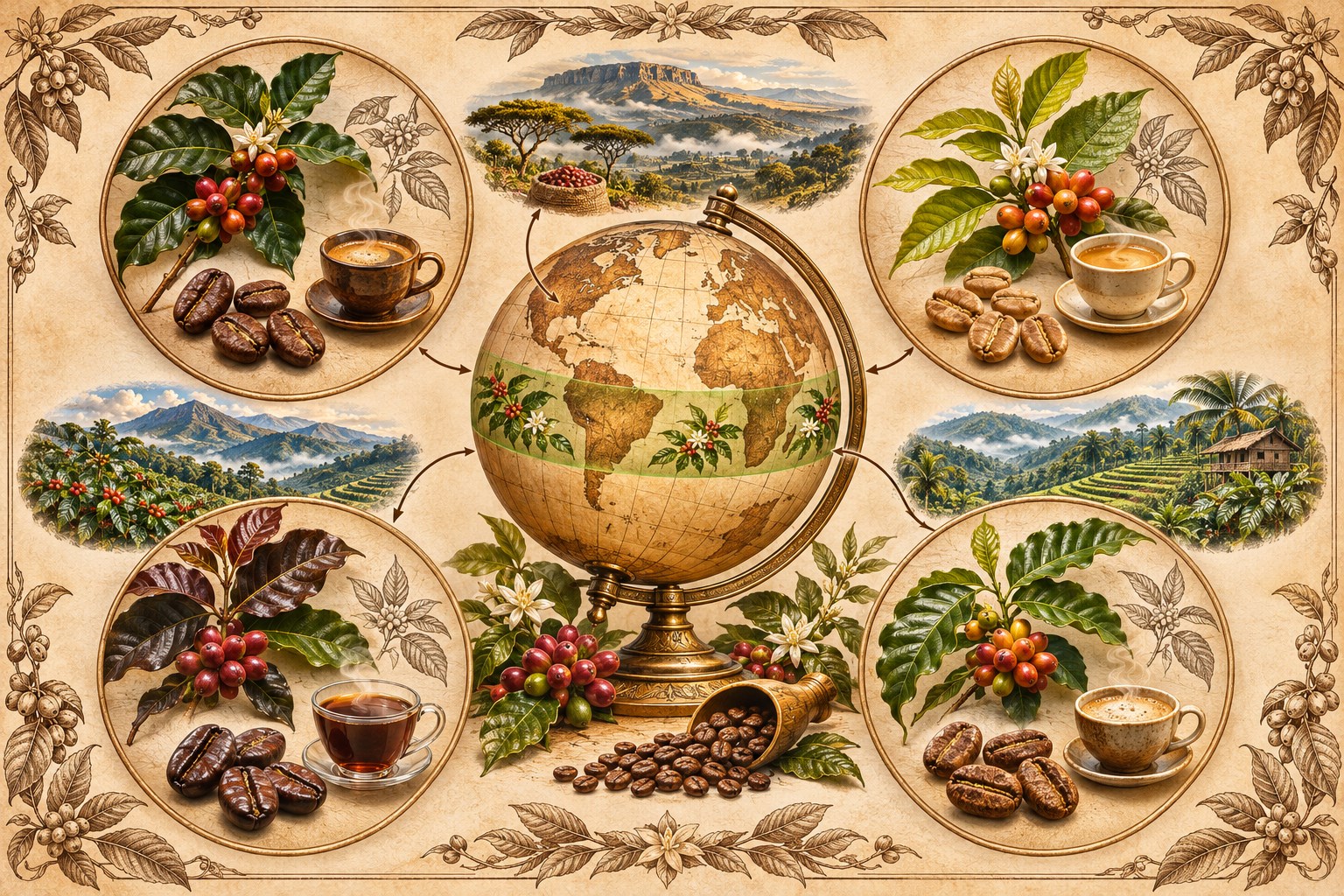
Coffee is part of the daily routine of millions of people, but not every coffee is the same. Geography, plant variety and processing shape the beans in our cups. This article introduces Arabica, Robusta, Liberica and Excelsa and their role in a coffee brand.
Arabica
Arabica originated in Ethiopia and is widely grown in high-altitude regions, including parts of Latin America, Colombia, Brazil, Guatemala, Kenya and Ethiopia. The original article describes it as accounting for roughly 60% of production. Often associated with fruit and floral notes and less caffeine than Robusta, it is frequently chosen by premium and specialty coffee brands. Actual flavour depends on origin, processing and roasting.
Robusta
Robusta has West African origins and is widely produced in Vietnam, Brazil, Indonesia and Uganda. It is generally more resilient in hot, lower-altitude conditions than Arabica. It contains more caffeine and can have intense, bitter and earthy notes. Espresso blends often use it for body and crema, and it can suit brands seeking an intense, accessible product.
Liberica
Liberica originated in West Africa and is produced in limited quantities in parts of Southeast Asia, including the Philippines, Malaysia and Indonesia. Its beans are larger and irregular. Wood, smoke, floral and fruit notes may appear in its distinctive profile. It can be used in experimental blends and niche products.
Excelsa
The original article presents Excelsa within the Liberica group and mentions cultivation in the Philippines and parts of Africa. It is known for distinctive fruity, mildly acidic and tropical notes and can add depth to blends. Limited production makes it less common.
The coffee belt
Climate and soil help shape coffee alongside plant variety. The original article describes the coffee belt around the equator, covering regions such as Ethiopia, Kenya and Tanzania; Brazil, Colombia, Peru and Guatemala; and Vietnam, Indonesia, India and Yemen. Altitude, temperature, rainfall and soil influence the flavour profile.
Choosing coffee for your brand
Start with your audience and the experience you want to offer. Arabica is often considered for filter coffee and nuanced flavours. Robusta or blends with Robusta may suit a more intense, higher-caffeine product. Less common coffees such as Liberica and Excelsa may interest brands seeking something distinctive. Discuss actual availability and sample coffees before deciding.
Every bean has a story
Coffee carries geography and culture as well as aroma. Telling the story of your coffee clearly can help your brand connect with customers.